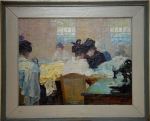
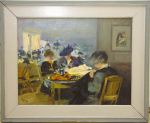
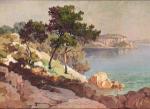
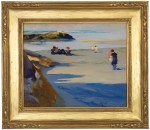
 Yesterday, when I was perusing one of my favorite websites, New York Social Diary, (I’ve written about it here before) I came across the story of Elizabeth Wentworth Roberts. She was a prolific painter and co-founder of the Concord Art Association which still functions today. I’ve posted a few of her works here. From a wealthy Philadelphia family, she decided at 15, inspired by Mary Cassatt, that she would become a painter. She did become an accomplished painter and her contemporaries included John Singer Sargent, Claude Monet, Cassatt, Daniel Chester French (he sculpted the statue of Abraham Lincoln for the Lincoln Memorial), Childe Hassam and George Bellows.
When she was in her fifties, she was diagnosed with “melancholia.” In 1925, her doctor told her it was in her best interest to stop painting. Not long after, she hanged herself. She was 56 years old. Hey, who doesn’t suffer from at least a mild case of melancholia? I’m sure the doctor or doctors had reasons for recommending Elsie retire her paintbrush, but it seems to me, that they failed her. Would she never have killed herself if she kept painting? I don’t know. I’m aware of the frustrations that arise from exploring our art, like hating what you’ve created or feeling that your art has been passed over or even creating something so great that after the crescendo, there is an emptiness and a question as to whether you’ll ever create something you are proud of again. But my position is and probably always will be, we need our art. It is what carries us through the hard times.
So maybe today, you’ll do your art and think about Elizabeth Wentworth Roberts. She knew your melancholia, it was hers, too. And if someone encourages you to stop creating, I’m not a doctor, but I don’t think you should listen to them.




 easilycrestfallen