A couple days ago, my friend Barbara asked me if I was going to have guest bloggers. She said my post about pools prompted her to write something and wondered if I’d be interested in sharing it. I said I would be thrilled to post her piece. Not only is she the one person with whom I always talk books, she also recently won an award from the American Literary Review in the Creative Non-fiction category.
Enjoy:
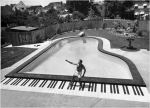
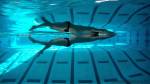
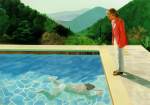
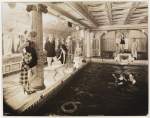
Opening Ray’s envelope inviting us to join him in the pool, the visuals drew me right in. I was a swimmer my whole life. My father threw me literally in the ocean at age three and said sink or swim. I swam. Later, being on the Cherry Valley Swim Club swim team defined me in my early years, and I loved it because: I was fat and I was not an athlete. When we played baseball and football on my street, I was put in the most unnecessary position and constantly yelled at to “stop dancing around and daydreaming over there and pay attention.”
In the water, I felt thin. My body slimmed down and smoothed out, weightless. Every Saturday morning we had swim meets, and I won trophies because in the water as opposed to on land, I could move swiftly. One week, my father, strict, overbearing and one of the most amazing long distance swimmers I have ever encountered, must have gotten up from the sidelines because in the middle of a relay race, as I was doing my turn, twirling under the water, my favorite part – action specific to dance, gymnastics, which on land I couldn’t master gracefully, ready to press my feet against the cement and push off to give me that added advantage the “turn” gives all swimmers, I heard above me that bellowing voice from the man the entire neighborhood was afraid of, my father, yelling, “You’re losing time on your turns!”
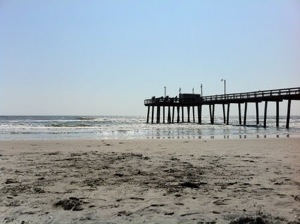
It wasn’t an instant transition; it took building our summerhouse on the jersey shore, therefore, shifting allegiance naturally to the ocean, but by the time I was in high school I found myself saying, “I hate pools.” Why? I would say, “Too confining, no waves, nothing happens; it’s boring.”
Reading Ray’s piece I thought: no, too hard.
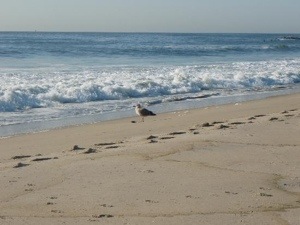
I fell in love with the ocean because I succeeded there, on my terms and on my father’s, because, like him, I was fearless in the ocean. And the poetry of this story is the same ironic poetry my father invokes in most stories I tell about him: the strictest father on the street, he trusted us, so we had no curfew. He had no rules in the ocean. He too stopped swimming in pools because they confined him; no cement walls, no lanes. He stopped swimming in the ocean while the lifeguards were there because – as he put it one day when they dragged it out and drove off with him in the beach patrol jeep because he refused to swim in front of the stand, “I’ll be damned if anyone is going to tell me where to swim in the god damn Atlantic Ocean.”
He took me out as far as we could go, almost unable to see the shore (terrifying my mother). He taught me how to get back to shore when we were caught in a rip tide together once. I fell in love with the waves crashing this way and that, getting out past the surf and floating, on a raft or on my body – bearing absolutely nothing and doing my favorite thing in the world: daydreaming.















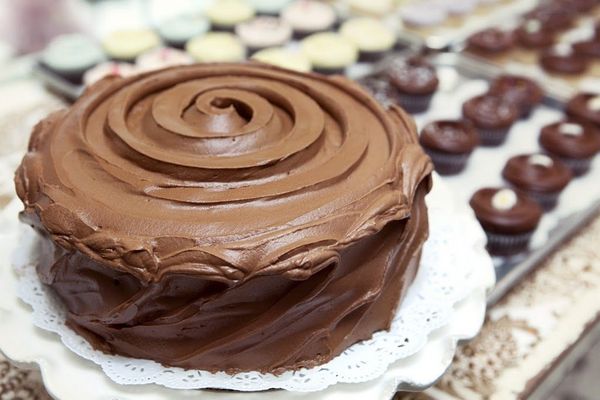
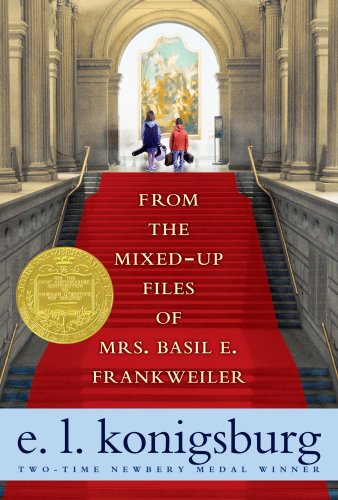
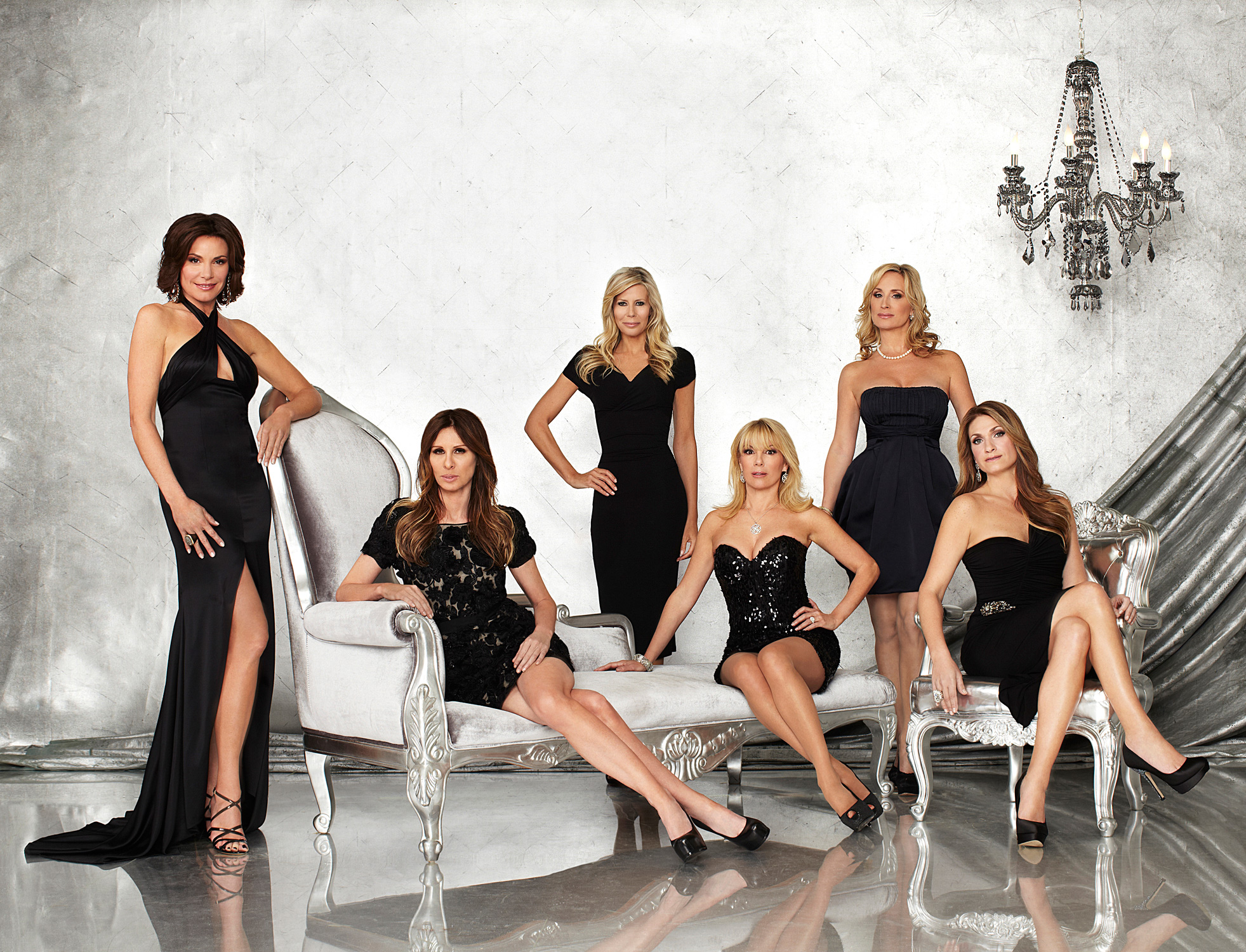 They say that anything is possible. An example of this is that one of Bravo’s Real Housewives led me to one of my favorite authors. In early 2012, when I read that someone named Carole Radziwill was going to be one of the new Real Housewives of New York, I picked up her book, What Remains, a New York Times bestseller about her husband and their friendship with his cousin, JFK Jr. and JFK Jr’s wife Carolyn Bessette Kennedy. I was moved by her well-written account of love and loss. She wrote in the book about another book Manhattan, When I was Young and how it was a comfort to her during a troubling time. Talking me into reading a book about New York City is about as difficult as talking me into eating chocolate cake for breakfast. So, I read it. The author, Mary Cantwell, broke the book into five different parts, the five different apartments she lived in when she first moved to Manhattan in the 1950’s, first as an unmarried college graduate with a new job into her first years of marriage and early motherhood in the 1960’s. The book is about her husband and children and jobs, but centrally it’s about a stranger coming to New York and finding their place. I loved it. And then I read her other books, American Girl: Scenes from a Small-Town Childhood and Speaking with Strangers: A Memoir. All three are currently available as a trilogy called Manhattan Memoir. I read all three in the span of a few days and they are wonderful. The first is about her childhood, the third is largely about her daughters and travels writing for Mademoiselle and Vogue. But her second is the one that touched me most. While I was reading it, I google earthed every address she talked about in the book. Of course, every building is still there. And it wasn’t hard to imagine a twenty-something moving to New York, a heart full of dreams, making their way with successes and failures in the big city. She reminded me of Peggy from Mad Men, but she also reminded me of someone else I know even better.












 easilycrestfallen